
As a child and adolescent therapist, I think often about the rise in mental health problems among children and adolescents. Colleagues and I have speculated about the role of COVID, the quarantine, and subsequent hybrid learning. We have wondered about the role of smartphones and the reality that younger and younger children have access to social media. We have spoken about global problems, such as climate change and international and national conflicts which are of concern to many children. And we have also speculated that even when children are “unaware” of such global problems, they are most likely affected by their parents’ anxiety about them.
A September 2023 article published in the Journal of Pediatrics reviews research that indicates that in addition to those possible causes of the increase in childhood anxiety and depression is another significant factor: the decline in independent play. They state,
Our thesis is that a primary cause of the rise in mental disorders is a decline over decades in opportunities for children and teens to play, roam, and engage in other activities independent of direct oversight and control by adults.
Gray, P., Lancy, D. F., Bjorklund, D. F. (2023). Decline in Independent Activity as a Cause of Decline in Children’s Mental Well-being: Summary of the Evidence. The Journal of Pediatics.
They cite research that validates that there has, indeed, been such a decline in independent play in childhood, that began in the 1960s. In addition, research, mostly conducted in Europe, shows a decline in children’s independent mobility, or their ability to move around outside without adult supervision or presence. With that decline comes significant mental health consequences.
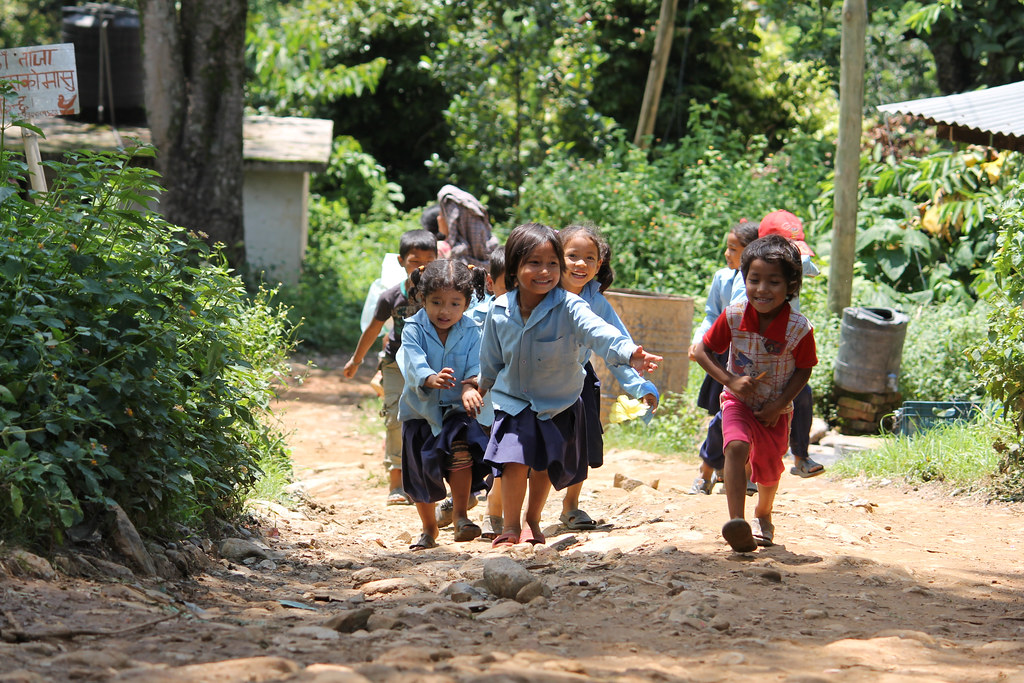
For example, a Swiss study compared 5 year olds permitted to play outside in their neighborhoods without adult supervision with 5 year olds living in higher traffic areas who were taken by parents to parks for play, and therefore supervised by adults. The study found that
those who could play freely in neighborhoods spent on average, twice as much time outdoors, were much more active while outdoors, had more than twice as many friends and had better motor and social skills than those deprived of such play.
The authors explain that most play researchers define play as
activity initiated and directed by the players themselves, not by an outside authority
Many of our today’s children are engaged in all kinds of enriching activities, but most of them are organized and supervised by adults.
In addition to improving mental health, increasing opportunities for independent play facilitates healthy development, not only socially and emotionally, but also cognitively and academically. A 2020 article published in the Journal of Infant, Child, and Adolescent Psychotherapy also documents the decline in free play in modern childhood. The authors present research linking play to positive social, emotional, cognitive, and academic development. They state,
From the whole child perspective, play is a developmentally appropriate way to simultaneously foster multiple developmental skills, as play organically exercises social-emotional, physical, and cognitive processes.
Molly A. Schlesinger , Brenna Hassinger-Das , Jennifer M. Zosh , Jeremy Sawyer , Natalie Evans & Kathy Hirsh-Pasek (2020) Cognitive Behavioral Science behind the Value of Play: Leveraging Everyday Experiences to Promote Play, Learning, and Positive Interactions, Journal of Infant, Child, and Adolescent Psychotherapy, 19:2, 202-216, DOI:
10.1080/15289168.2020.1755084
I invite you, as parents, to consider how to make more room for independent play in your children’s lives, knowing that it is critical to their healthy development.
 What's so important about play?